


Project Overview
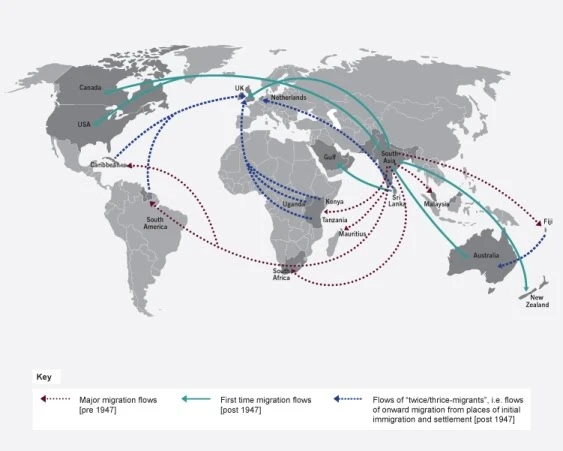 Results of this research will be used to develop a predictive panel of lifestyle, environmental, genetic and epigenetic markers increasing susceptibility to Type 2 Diabetes (T2D) in South Asians, and to quantify the contribution of these risk factors to T2D amongst South Asians in diverse regional settings.
To date, little data has been available to scientific and clinical communities on mechanisms increasing susceptibility to T2D among South Asians. Hence, understanding of disease mechanisms underlying T2D in South Asians remains limited. In turn, this has hampered efforts to develop predictive tests, and preventive strategies, to help reduce the burden of disease in this population. This project represents the first large scale international effort aimed at the identification and qualification of novel disease mechanisms and traditional and genetic risk factors underlying the high burden of T2D amongst South Asians. General Aim
Our general aim is to identify novel epigenetic markers underlying increased risk of Type 2 Diabetes (T2D) in South Asians. We will carry out epigenome scans in non-migrant (living in India) and migrant (living in UK) South Asian T2D cases and controls, with replication of top ranking epigenetic markers in South Asian T2D cases in differing regional settings. We will then develop a predictive panel of lifestyle, genetic, environmental, and epigenetic markers underlying susceptibility to T2D in South Asians. Finally, we will examine the extent to which each of the risk factors identified account for prevalent T2D among South Asians, in different regions worldwide.
Our specific aims are to:
Project Timeline
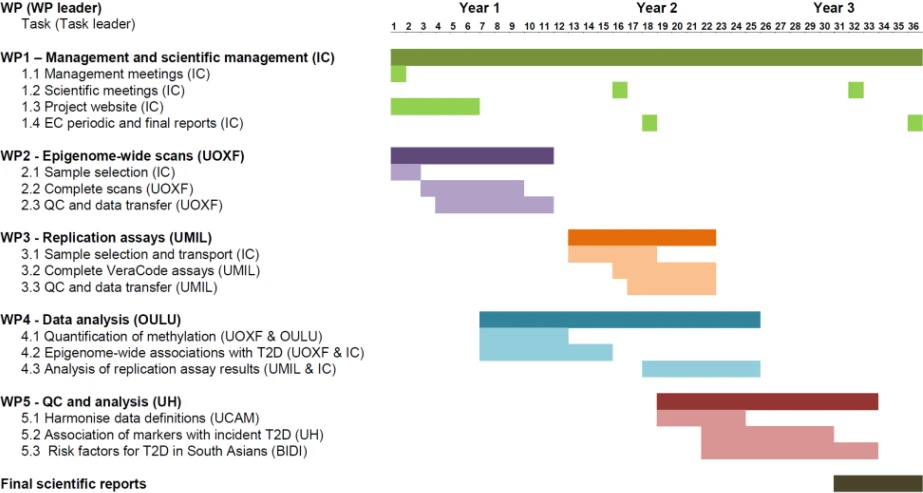
The EpiMigrant Project began on 1 December 2011 and is scheduled to run until 30 November 2014. The chart below shows the project timing.
 |
|
|

EpiMigrant: Identification of epigenetic markers underlying increased risk of Type 2 diabetes in South Asians.
Funding scheme: Specific International Cooperation Action (SICA), Collaborative Project.
Work programme topics: HEALTH.2011.2.4.3-4 Genetic and environmental factors in obesity and/or diabetes in specific populations.
Project Investigator: Dr John Chambers, Imperial College London.
This project has received funding from the European Union’s Seventh Framework Programme for research, technological development and demonstration under grant agreement no 279143.